This article is reprinted from Peking University News Network.
From November 3 to 4, 2023, the Beijing Forum (2023) "Green, Low-Carbon Transportation and High-Quality Urban Development" sub-forum was held at the School of Urban and Environmental Sciences at Peking University. This sub-forum was jointly organized by the School of Urban and Environmental Sciences at Peking University, the Carbon Neutrality Research Institute of Peking University, the Key Laboratory of Territorial Spatial Planning and Development Protection of the Ministry of Natural Resources, and the Peking University Territorial Spatial Planning and Design Research Institute. The forum attracted the attention and active participation of numerous experts and scholars from universities and research institutions at home and abroad in related fields. At this forum, a total of 18 experts and scholars from home and abroad delivered speeches on the themes of "Urban Sustainable Development" and "Green Transportation," sparking lively discussion and in-depth reflection among the audience.
Professor He Canfei, Dean of the School of Urban and Environmental Sciences at Peking University, delivered a welcome speech to the delegates. He briefly introduced the background, history, and theme of the Beijing Forum, and expressed hope that the forum will provide intellectual support for global sustainable development and promote high-quality urban development. He Canfei presided over the keynote speech for the first half of the sub-forum.
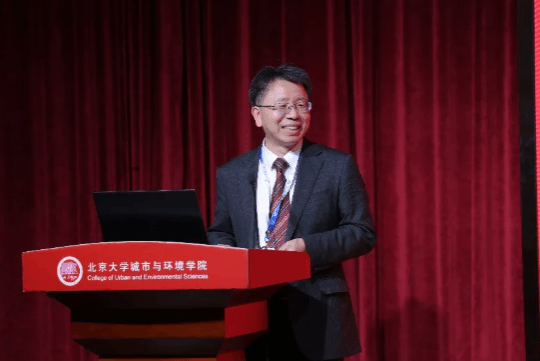
He Canfei delivered a welcome speech
Academician Guo Renzhong of the Chinese Academy of Engineering delivered a speech titled "Modern Urban Scientific Cognition." He emphasized that in-depth research of the city itself is the primary task in smart city research, and proposed nine characteristics of cities in the new era as well as two new theories. In addition, Guo Renzhong offered suggestions on urban governance, emphasizing that although information technology is important, it cannot solve urban planning and governance problems alone; urban development requires new theoretical support.
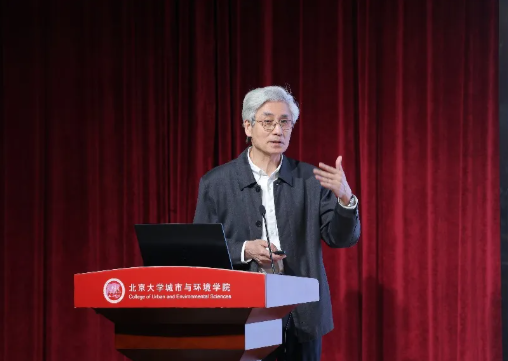
Guo Renzhong delivered a speech
Professor Wu Fulong from University College London delivered a speech titled "Research on Urban Environmental Governance in China." He explored China's urbanization development and the environmental challenges it faces, focusing on the new agenda and challenges of ecological civilization. He summarized the positive impacts of ecological civilization on government, markets, and society, emphasizing the necessity of cooperation between the market and government, as well as the challenges and opportunities faced in urban governance.
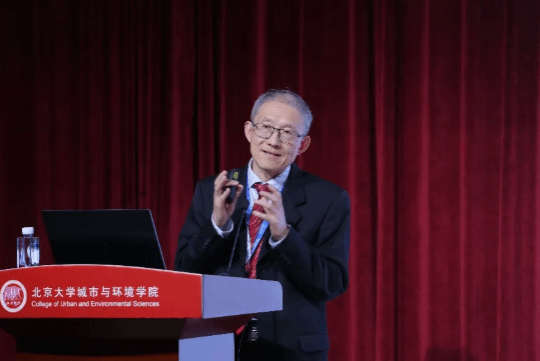
Wu Fulong delivered a speech
Professor Jago Dodson, Director of the Centre for Urban Studies at RMIT University in Australia, delivered a speech titled "Sustainable Transport Transformation in Australian Cities: Challenges, Issues, and Policies." He shared the impact of urban dispersion and private car use on climate change, emphasizing that cities should be key areas for climate action. He called on the government to formulate policies to reduce car use and promote sustainable urban development.
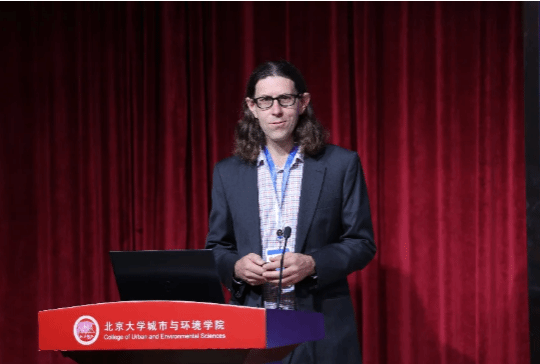
Jago Dodson gave a speech
Professor Lin Jian, Director of the Department of Urban and Regional Planning at the School of Urban and Environmental Sciences, Peking University, presided over the second half of the keynote speech and briefly introduced the selection of topics and preparation process for the sub-forum.
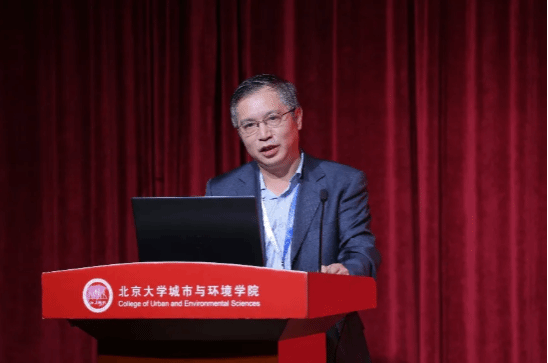
Hosted by Lin Jian
Guo Jifu, Director of the Beijing Transportation Research Institute, delivered a speech titled "Vision and Path for Zero-Carbon Transformation of China's Urban Transportation," pointing out that urban traffic issues are closely related to traffic congestion and air pollution. He proposed a "3+2" solution aimed at addressing the challenges brought by urbanization and mobility, and promoting the transition of Chinese cities toward zero-carbon transportation
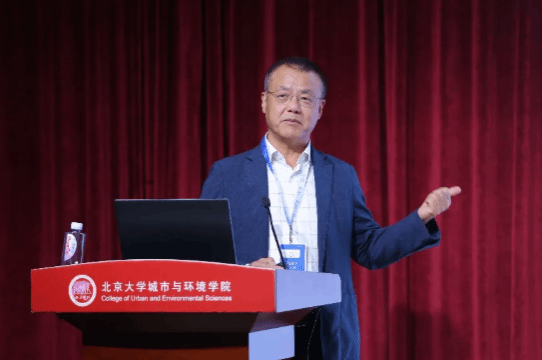
Guo Jifu delivered a speech
Professor Lin Chusheng from the University of Hong Kong delivered a speech titled "The Green Shift of Urbanization in China: Unified Command, Path Differentiation, and New Geography of Low-Carbon Urbanism in Development." He explored the relationship between carbon emissions and urbanization, pointing out that carbon emissions are concentrated in large and mega cities. He called on the government and businesses to take further measures to reduce carbon emissions and achieve low-carbon development.
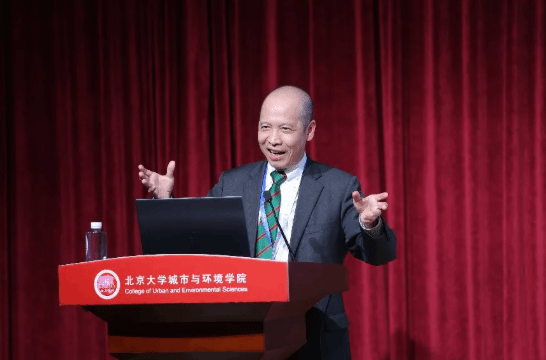
Lin Chusheng delivered a speech
Professor Sock-Yong Phang from Singapore Management University delivered a speech titled "Designing Better Mechanisms for Green, Transit-Oriented Development." She emphasized the seriousness of global carbon emissions and introduced the importance of green buildings and low-carbon transportation policies. She also emphasized the importance of collaboration among governments, owners, and utility companies to enable the deployment and application of renewable energy.
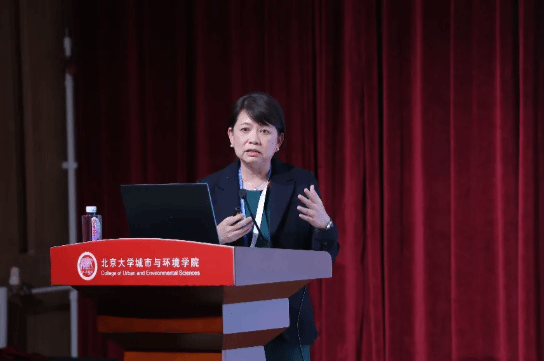
Sock-Yong Phang's speech
The first session of the special guest lecture was chaired by Professor Liu Zhi, Director of the Center for Urban Development and Land Policy Research at Peking University-Lincoln Institute.
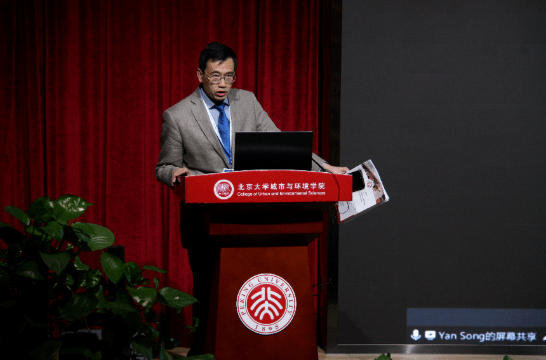
Liu Zhi presided
Professor Song Yan from the University of North Carolina at Chapel Hill delivered a speech titled "Redefining American Cities: Urban Filling and Low-Carbon Transformation After Urban Expansion." She introduced the concept of urban reclamation and demonstrated its effects through examples. She also gave a detailed comparison of the differences between urban expansion and urban reclamation renovation, emphasizing the enormous potential of inland renovation to improve urban quality.
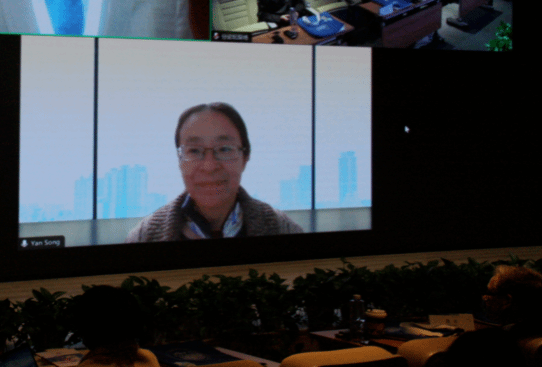
Song Yan delivered a speech
Mr. Terry Townshend, Paulson Institute advisor, delivered a speech titled "Nature-Friendly Urban Infrastructure and Sustainable Development — Synergy Between Cities and the Global Biodiversity Framework." He pointed out that cities have a responsibility to protect and support biodiversity, and emphasized its importance. He called on cities to actively participate and promote harmonious development between humans and nature.
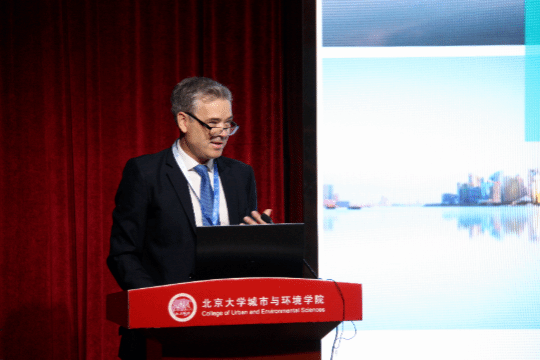
Terry Townshend gave a speech
Professor Sun Bindong from East China Normal University delivered a speech titled "Land Use Strategies for Shaping Urban Green and Low-Carbon Transportation." He believes that to achieve green and low-carbon transportation, greater emphasis must be placed on traffic demand management and land use planning. He also explored the impact of factors such as the size, multi-center structure, population density, government intervention, public transportation, compact urban spaces, and metro accessibility on transportation behavior and carbon emissions.
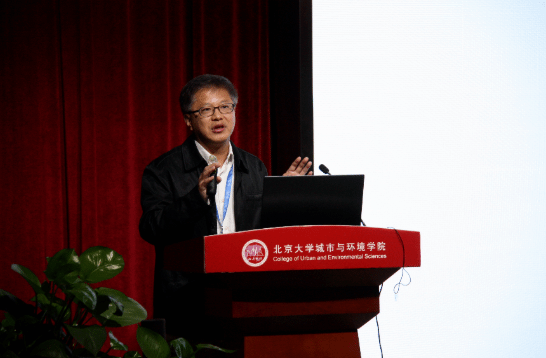
Sun Bindong delivered a speech
The second session of the special invited lecture at the sub-forum was chaired by Researcher Ma Liang from the School of Urban and Environmental Sciences, Peking University.
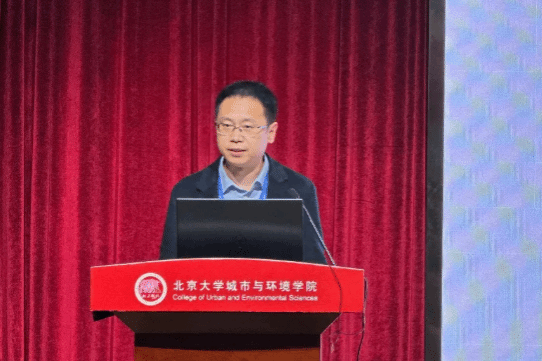
Ma Liang presided
Professor Zhang Ming from the University of Texas at Austin delivered a speech titled "Green TOD: Concepts, Methods, and Planning Tools." He pointed out that traditional "TOD1.0" has some issues in spatial, social, and environmental dimensions. To address these issues, he proposed the framework and methods of "TOD 2.0" and shared two research practices conducted in Wuhan and Austin. He emphasized that the application of empirical data and models is crucial to "TOD 2.0."
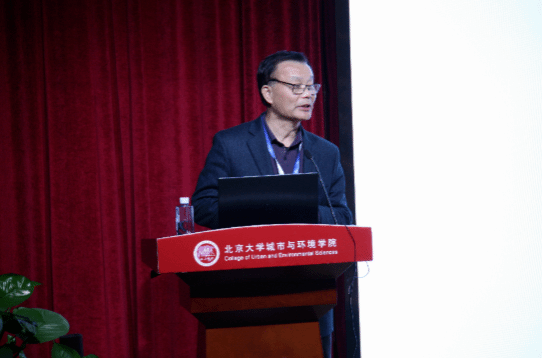
Zhang Ming gave a speech
Professor Zhang Fangzhu from University College London delivered a speech titled "Multi-scale Social Ecological Restoration: The Development of Chengdu's 'Tianfu Greenway'." She introduced the unique features and impact of the Chengdu "Tianfu Greenway" project, emphasizing the importance of cooperation among the government, enterprises, and society in ecological restoration. She called for the close integration of ecological restoration with urban governance, incorporating environmental protection and sustainable development into urban growth plans to achieve multi-scale social ecological restoration goals.
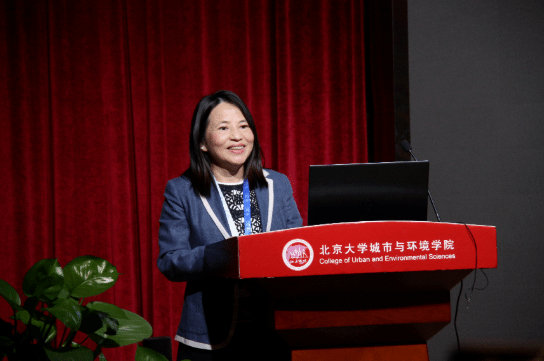
Zhang Fangzhu delivered a speech
Wang Hao, Executive Vice President of the Peking University Institute of Territorial Spatial Planning and Design, delivered a speech titled "The Return of Bicycles to Support the Development of Low-Carbon Green Transportation." She emphasized the environmental and health benefits of cycling returning to cities, and encouraged people to adopt cycling more to contribute to sustainable urban development. She believes that the return of bicycles is expected to reduce traffic congestion, improve air quality, and promote the popularization of healthy lifestyles.
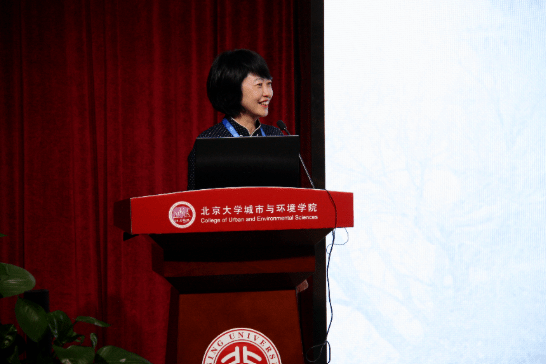
Wang Hao delivered a speech
The third session of the special guest lecture at the sub-forum was chaired by Professor Yang Jiawen from the School of Urban Planning and Design at Peking University.
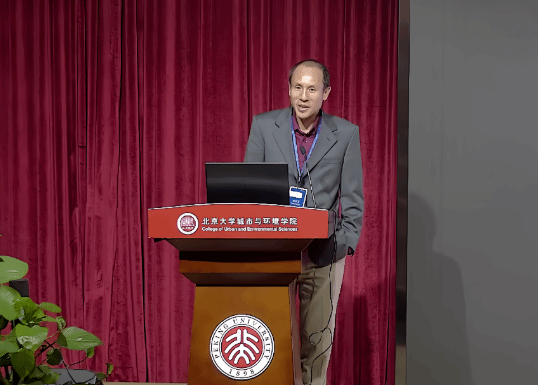
Hosted by Yang Jiawen
Professor Wang Donggen from Hong Kong Baptist University gave a speech titled "Is Free Public Transport Effective for Improving Air Quality in Chinese Cities?" sharing an empirical study conducted in Fuzhou and emphasizing that free public transport policies have a positive impact on improving urban air quality and public health, making them an economical and efficient transportation policy.
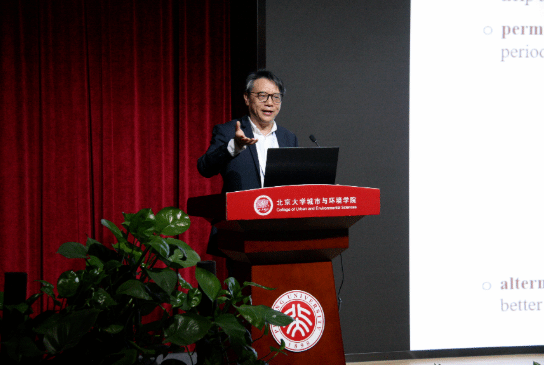
Wang Donggen delivered a speech
Professor Zhou Suhong from Sun Yat-sen University delivered a speech titled "Smart Transportation Services and Traffic Governance for Public Health." She stated that health dimensions should be integrated into intelligent transportation and future smart services. Technologies such as big data, mobile devices, smart navigation, and wearable devices have significant value in intelligent transportation systems, travel modes, urban planning, and environmental governance.
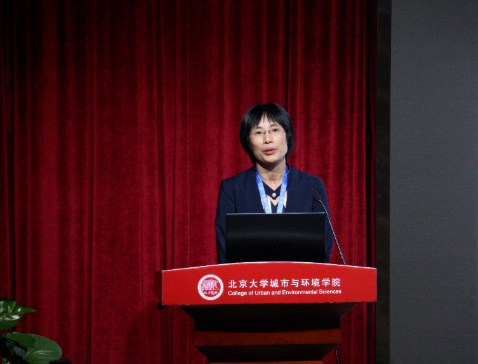
Zhou Suhong delivered a speech
Researcher Wang Jiao'e from the Institute of Geographic Sciences and Natural Resources Studies, Chinese Academy of Sciences, delivered a speech titled "Localization Reflections on the TOD Model: A Case Study of Beijing." She used Beijing as an example to discuss the impact of urban rail transit on land use, and pointed out that the integrated development of the TOD model links transportation and land use, but there are also some types of stations where transportation functions and land use are independent.
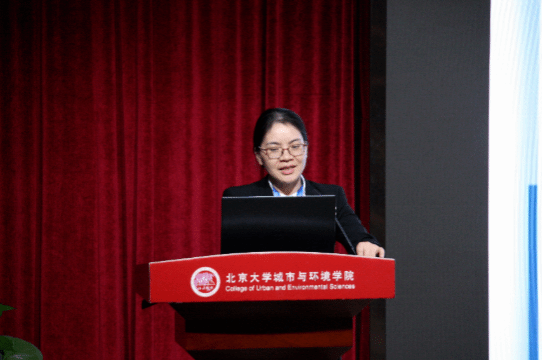
Wang Jiao'e gave a speech
The fourth session of the special guest talk at the sub-forum was chaired by Wang Hao.
Wang Jixian, Research Director of the Greater Bay Area Hong Kong Centre and the Belt and Road Hong Kong International Center, delivered a speech titled "Can Cities and Intercity Railways Become Low-Carbon Solutions for the Guangdong-Hong Kong-Macao Greater Bay Area?" He believes that the development of intercity railways can reduce carbon emissions to some extent, and points out that government policies and decisions directly affect the planning and development of intercity railways, achieving a carbon reduction effect. Different regions need to formulate corresponding construction and operation standards based on local conditions to ensure the sustainable development of intercity railways.
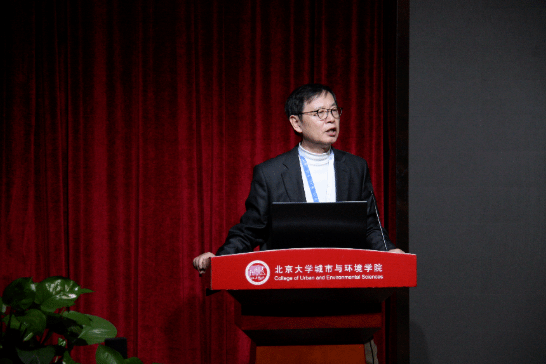
Wang Jixian delivered a speech
Professor Pan Haixiao from Tongji University delivered a speech titled "Proximity to Rail Transit and Commuter Carbon Emissions." He identified three key elements for achieving low-carbon development, delved into the impact of urban planning on carbon emissions, and emphasized the importance of circular thinking. He pointed out that urban planning needs to flexibly adapt to different urban structures and economic forms. Cities are complex, and urban planning requires considering solutions to various conflicts. He also particularly emphasized the necessity of conducting in-depth and solid urban data surveys.
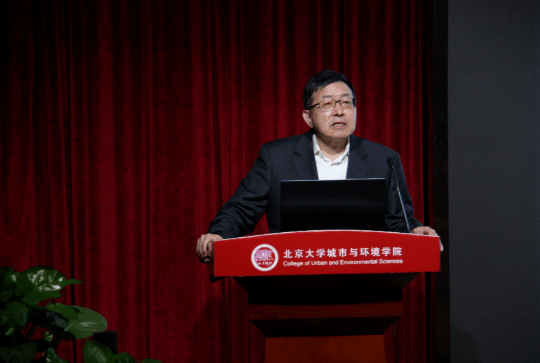
Pan Haixiao gave a speech
Professor Zhao Pengjun of Peking University delivered a speech titled "Research on Freight Emission Reduction Pathways." He believes that increasing the number of electric trucks can significantly reduce carbon emissions. However, this initiative also faces challenges such as high costs. He pointed out that a fragmented industrial layout may lead to increased demand for train transport, thereby increasing carbon emissions. Addressing road freight carbon emissions is a systemic issue that requires comprehensive consideration of urban, regional, and overall planning.
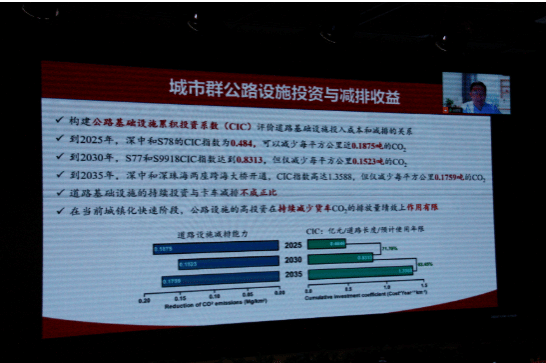
Zhao Pengjun delivered a speech
Wang Hao summarized the meeting and announced its successful conclusion. The holding of this sub-forum not only provided scholars with a platform for exchange and sharing but also offered more ideas and inspiration for promoting green, low-carbon transportation and high-quality urban development.
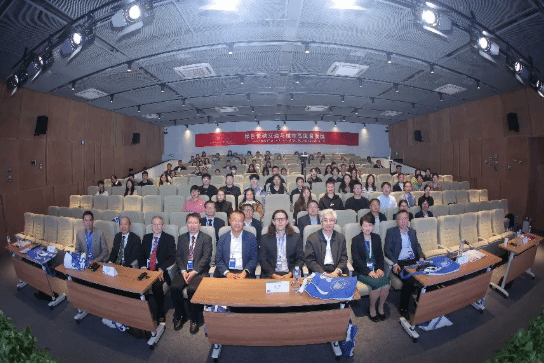
Group photo taken as a memento