As one of the key events of the 2022/2023 China Urban Planning Annual Conference, the academic dialogue "Fiscal Issues in China's Urban Planning," organized by the Center for Urban Development and Land Policy at Peking University-Lincoln Institute, was successfully held in Wuhan on the morning of September 25, 2023.
On the morning of September 25, 2023, the academic dialogue "Fiscal Issues in China's Urban Planning" was held at the 2022/2023 China Urban Planning Annual ConferenceHeld at the Wuhan International Expo Center. This dialogue was hosted by the Center for Urban Development and Land Policy Research at Peking University-Lincoln Institute, with Director Liu Zhi and Professor Wang Shifu, Director of the China Urban Planning Society, Deputy Director of the Urban Design Branch, and Associate Dean of the School of Architecture at South China University of Technology, serving as co-hosts. This dialogue invited eight experts and scholars in the fields of planning and finance to engage in in-depth discussions on fiscal issues in China's urban planning. Nearly 300 attendees attended the event, filling the venue and engaging in lively exchanges.
Urban finance is closely related to urban planning; the implementation of urban planning, urban renewal actions, and infrastructure construction all rely on the support of urban finance. Urban planners must not only envision the future but also be able to calculate the big picture. However, in China's urban planning process, there is a lack of effective coordination with urban finance, resulting in overly large planning patterns, land waste, insufficient funds, and difficulties in sustaining urban public finances. Therefore, it is urgently necessary to explore the institutional arrangements and policy framework for coordinating urban planning and fiscal policy at both theoretical and practical levels, in order to enhance the professional level of urban planning and meet the requirements of high-quality urban development.
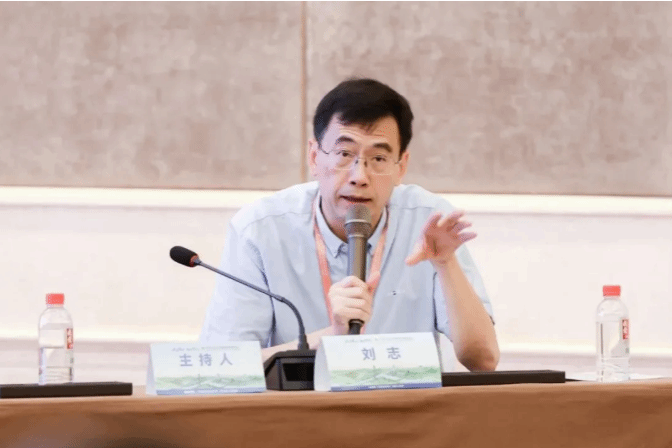
Director of the Urban Development and Land Policy Research Center at Peking University-Lincoln Institute
In the first half of the dialogue, experts discussed the long-standing lack of consideration for urban finances in China's urban planning work, the consequences of urban planning implementation and development, and the necessity for planners to take big pictures when outlining visions. In his introductory speech, Director Liu Zhi pointed out that years ago, in his work exchanges with local governments, he found that planning and finance departments lack effective communication regarding infrastructure project investment, and that China's fiscal budget preparation cycle is too short, making it difficult to effectively connect with urban planning. In recent years, China's local fiscal reform has implemented a three-year medium-term fiscal plan. We can explore whether the five-year fiscal plan can be aligned with the five-year construction plan. Director Liu Zhi emphasized that planners need to consider financial constraints when outlining the vision to ensure stable urban development.
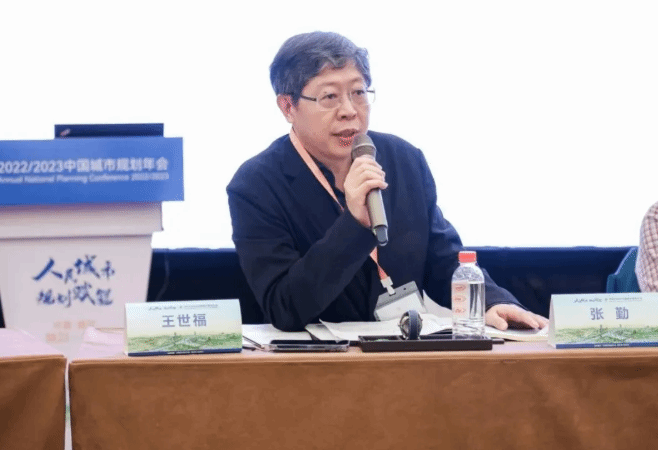
Second half host: Wang Shifu
Council member of the society, deputy director of the Urban Design Branch, associate dean and professor of the School of Architecture at South China University of Technology
In the second half of the dialogue, experts shared their views on the issues needed to be addressed and the actions to be taken to strengthen the connection and coordination between planning and finance. In his inviting speech, Dean Wang Shifu emphasized the importance of urban finance issues for the professional competence and disciplinary development of future planners. Facing systemic financial difficulties or crises, how the planning department can contribute and what support planning research can provide are also issues to be explored in the second half. In addition to making routine contributions in the past, planning departments should also set fair, savvy, and effective financial targets, and value the roles of the public and market sectors and their responsibilities to social development. During the planning process, planners should learn from and integrate the knowledge of financial experts, and through more scientific planning, contribute more pragmatically to the city's high-quality development.
Executive Director of the Society, Deputy Director of the Academic Work Committee, and former Deputy Director of the Hangzhou Planning and Natural Resources Bureau
Director Zhang Qin first pointed out that fiscal issues are a very important fundamental issue in planning and a key reflection of the public policy nature of planning. China's operational and management systems have led to a lack of in-depth analysis and research on fiscal issues in urban planning. We cannot focus solely on the financial balance of projects from a market perspective. She cited the example of new district development, pointing out that planners should not consider financial issues solely from the perspective of projects and balance sheets, but should consider the overall urban perspective, make long-term plans from a financial perspective, while paying attention to both macro and micro factors to maintain the sustainable operation of the city's long-term development and better leverage the effectiveness of urban planning.
Solving the connection and coordination between planning and fiscal policy requires strengthening education on fiscal issues related to urban planning to fill blind spots and gaps. Urban finance is not just a financial issue; it also involves fairness and efficiency in resource coordination, the city's capacity for sustainable development, and how to coordinate all internal and external entities to jointly promote the development of various urban undertakings. This synergy operates at both micro and macro levels, involving both short-term and long-term considerations. Future urban planning needs to provide solutions for operators and consider how to ensure cash flow to guarantee the ongoing operation of projects. Therefore, in the long run, fiscal issues should be systematically incorporated into planning education to enhance the fiscal awareness and capabilities of decision-makers and practitioners; Currently, relevant universities and research institutions should promptly carry out professional training in this area. Finally, Director Zhang Qin believes that public finance theories should be used to innovate policy tools, promote planning transformation and capacity enhancement, and better serve the high-quality development of the city for the people.
Dean and Professor at the School of Public Administration, Zhejiang University
Dean Zhao Zhirong believes that finance is the domain of public administration, and urban finance uses fiscal policy as an entry point to explore urban development, construction, and governance. Due to China's unique land management system and large-scale urban development, past urban planning neglected fiscal issues, making it more urgent than ever to consider financial issues in urban planning. Planners should consider urban finance from three perspectives: first, urban finance as a guarantee for urban operations; The second is urban finance oriented toward development and construction; The third is urban finance as a tool for public governance. In addition, when considering urban finance, urban planners should conduct a comprehensive assessment of the city's fiscal health, proactively apply various fiscal and investment tools to promote public governance, and coordinate the three ledgers at the project level, the city finance level, and the economic level.
Local governments need to undertake governance reforms to establish sustainable local revenues, shifting from reliance on land revenues to tax revenues. At the same time, local governments should establish autonomous mechanisms for local budgets and investment and financing settlements. Additionally, planners should enhance their training in social sciences such as public administration and public finance, using their expertise to drive everyone to achieve common goals. The coordination of planning and finance is the most prominent issue in China, and the space for studying these issues is vast. Finally, Dean Zhao believes that urban finance should be the core area of planning, and strengthening the connection between the two is a good opportunity to solve local fiscal difficulties.
Associate Dean and Professor at the School of Finance and Taxation, Central University of Finance and Economics
Professor He Yang pointed out that under the current backdrop of stable macro tax burdens and optimized tax systems, the pressure to increase tax revenue growth is increasing, and the market funds that can be leveraged by fiscal funds in planning projects are also significantly decreasing. Under dual pressure, planning and finance are more aware of their mutual importance, so doing the big picture is very meaningful. However, the big accounts also face difficulties. Whether at the national or local level, fiscal funds related to urban construction are scattered across different subjects, making coordination and accounting difficult. Therefore, the planning and financial sectors need to strengthen mutual understanding and promote each other, promoting sustainable economic development through financial support for development planning, thereby cultivating tax sources. Both the planning and finance authorities recognize the importance and difficulty of settling accounts, and future coordination and support will become even more important.
From a fiscal perspective, strengthening coordination with planning is reflected in two aspects: First, further strengthening medium-term fiscal planning during budget system reform, incorporating various compliantly determined medium- and long-term expenditures into the mid-term fiscal planning throughout the entire lifecycle according to project budget management requirements; Second, while meeting urban development needs, establish a sustainable debt financing mechanism. Finally, Professor He Yang expressed his desire to achieve sustainable planning and strengthen the link between finance and planning.
Professor at the School of Urban Planning and Design, Peking University Shenzhen Graduate School
Professor Yang Jiawen believes that under the influence of demographic dividends, globalization, and China's unique local land system, urban governments have strong land financing capabilities in the early stages of urbanization, providing a relatively relaxed fiscal environment for urban construction. This also offers planners and local decision-makers ample room to exercise. However, the problem of failing to properly settle accounts before planning and project implementation has begun to surface in recent years, with many third- and fourth-tier cities having numerous idle industrial parks and residences. Doing good accounts is the starting point for solving these problems. However, decision-makers may have many budgets to consider; project and planning accounts often yield to economic and political accounts; Long-term accounts may yield to short-term ones. Therefore, appropriate decision-making procedures are crucial; they enable key accounts to play their due role and motivate planners to calculate the big ledger well.
He believes that urban planning education should incorporate more content related to urban and public finance. Planning departments should not only offer courses on public finance and assign specialized teachers, but can also invite experts from outside the university to teach public finance expertise. When planning students encounter projects related to land development or infrastructure in their work, they judge the positive or negative financial impact these projects bring to city governments and select those that benefit society. Additionally, appropriate knowledge or skills in economic and financial analysis are very helpful for planners in the new situation. Finally, when balancing urban planning and finance, efforts should be made to choose solutions that have positive value from an economic analysis perspective.
Associate Professor at the School of Urban Economics and Public Administration, Capital University of Economics and Business
Professor Yan Yan introduced her research integrating planning, geography, and finance, exploring the relationship between urban planning and finance from the perspectives of spatial efficiency and spatial equity. From the perspective of spatial efficiency, although urban sprawl can increase fiscal revenue, it also leads to a sharp rise in fiscal spending. Overall, urban sprawl has a negative impact on the fiscal health of local governments in China. However, many local governments focus only on income incentives, ignoring the impact of spending. The severe fiscal pressure faced by local governments highlights the importance of coordination between planning and fiscal policy. When considering the fiscal impact of planning, it is necessary to balance government benefits from a comprehensive and dynamic perspective, focusing on both short-term and long-term fiscal effects. From the perspective of spatial equity, fiscal spatial equity is reflected in fiscal equity and equalization. The underlying logic of fiscal differences is the mismatch between the spatial distribution of tax sources and the spatial distribution of population demand for fiscal expenditure. Research shows that regions with high population and industry deviation tend to have relatively poorer fiscal health. When people are relocated from central urban areas to the suburbs, suburbs need to take on more public services, creating fiscal pressure. Therefore, in the early stages of planning, we can achieve spatial matching of elements as much as possible to promote fiscal spatial equity.
Planning needs to shift from developmental thinking to constraint and bottom-line thinking, incorporating fiscal constraints into specific planning processes. This requires consensus among all government departments. To improve government fiscal health, it is not enough to focus solely on ways to increase fiscal revenue; it is also necessary to consider reducing unnecessary or potentially negative fiscal expenditure items. When conducting financial analyses of urban construction projects, the government should consider the balance of their long-term operations. The impact of urban planning on finance is comprehensive and dynamic, involving fiscal revenue and expenditure, affecting both current investments and future operations.
Planner at the Shanghai Branch of the China Academy of Urban Planning and Design
Planner Tang Jingxian, drawing on her frontline work experience, discussed the consequences of urban planning deviating from financial constraints and hastily considering cost and benefits. First, it could lead to area development or even the entire city falling into debt distress. Due to the lack of basic assessment of the government's medium- and long-term financial status and debt affordability in the early development planning, as well as the lack of reasonable forecasting and scenario simulation for development inputs and outputs in different economic environments, the lack of phased development performance evaluation and a timely post-event feedback mechanism after changes in background conditions result in poor project operation and a vicious cycle where the government faces continuously rising or even irreversible debt risks. Second, it may lead to inefficient development and redundant construction, which in the long run will downgrade the overall spatial performance of the city.
To solve debt problems, we need to shift from "focusing on land values with strong short-term effects" to "focusing on long-term asset preservation and appreciation," improving the long-term return rate of project development. First, identify high-quality assets. During the Urbanization 2.0 era, all assets should be re-examined from the perspective of cash flow. If real estate is neglected and cannot generate cash flow, the asset value will be zero or even negative. Second, focus on building cash flow. In area development, special emphasis should be placed on cultivating sustainable cash flow, with industry as king and operations as the front. We must deeply cultivate industries and adopt a long-term approach, thinking more about industrial investment promotion, implementation, operations, and layout, to improve long-term returns rather than short-term quick cash flow. The original bond financing approach based on real estate development has been transformed into a business logic focused on industrial park operations, enterprise attraction, and talent attraction. Third, strictly review the asset quality and potential of debt application projects. This is a requirement for government management departments. Pay attention to effective future repayment methods and substantial sources of income for special bonds. This year, with the economic situation unfavorable, bond issuance and fund allocation have accelerated, so more attention should be paid to the performance of bond usage to avoid wasting money all at once. If special bond projects cannot promote industrial development or improve people's livelihoods, and cannot drive long-term enhancement of urban asset value, their occupation of low-cost financial resources should be reduced.
To promote the connection and coordination between planning and finance, technical process reforms and paradigm reforms in planning should be considered, making financial calculations a necessary part of urban planning. The planning document should include a dedicated chapter on financial calculations, calculating tax revenue for the government, investment and financing costs and returns for banks, and cash flow and profit for investment entities. Changes in planning technical processes force planners to possess solid financial calculation capabilities, and the requirements of financial estimation force the integration of operations, investment, planning, construction, and management in planning.
Senior Policy Researcher at the Center for Urban Development and Land Policy Research, Peking University-Lincoln Institute
Researcher Liu Wei pointed out that planning aims to generate economic benefits through resource allocation. Planning requires financial support and is also subject to fiscal constraints; a positive interaction between the two is crucial for the healthy and sustainable development of cities. The relationship between planning and finance involves three aspects. First, planning cannot be separated from the constraints of the city's actual financial resources; it must be formulated based on a comprehensive and objective understanding of the city's financial situation. Second, cities should concentrate limited financial resources to support the implementation of the plan. The relationship between government and market should be delineated, and fiscal funds from various channels should be concentrated, with a focus on supporting public projects with significant externalities, low profitability, and market sector access difficulties. Third, coordination between planning and finance is reflected in the circulation of urban development and urban finance. Through policy tools for land value value recovery, land appreciation gains from public investment can be reasonably and effectively recovered, achieving sustainable urban construction funding. The finance department should establish diversified recovery tools based on taxes, fees, and land transfer fees, while in-kind land value-added tax instruments especially need coordination with planning departments.
It is recommended to promote the application of land value appreciation recycling policy tools and tools, and to organize domestic and international land value appreciation recycling tools and case studies to form a case database to facilitate the localization and localization of policy tools. In addition, it is recommended to provide relevant urban financial knowledge training for planners. Peking University-Lincoln Center has launched an urban finance certification course for Chinese urban planners, covering basic theories of urban finance, basic conditions of China's fiscal system, fiscal budgeting, urban debt, infrastructure financing, cost-benefit analysis, and urban fiscal health assessment.
Associate Researcher at the School of Architecture, South China University of Technology
Researcher Li Xinjian approaches from the perspective of micro-level project balance and returns, using rail transit planning as an entry point to share his understanding of the relationship between planning and finance, as well as the challenges faced in coordinating the two. He cited the problem in the comprehensive TOD development process of a certain city as an example to illustrate the situation where large-scale demolition and demolition have led to an inability to balance project costs and benefits. He further pointed out that as the spatial scale of a project expands, the time scale lengthens, and the connection between multiple plans increases, the interaction between finance and planning becomes increasingly unclear. He believes that during the planning and vision stage, planners need to do the math, but at the same time, they face challenges caused by insufficient data.
When integrating construction funds, medium-term financial planning, and a specific planning scheme, the advantage lies in clearly understanding the sources and destinations of the entire fund, effectively improving project transparency. However, two potential shortcomings must also be noted: first, it creates upward approval pressure—'whoever approves is responsible'—higher-level administrative agencies may bear excessive risks; The second is to suppress downward flexibility; projects that comply with fiscal prudence may not be the most ideal from a planning perspective. Overall, in the urban construction process, the planning system requires active cooperation and coordination with departments such as the Development and Reform Scheme and Finance Department from top to bottom. Finally, he believes that the coordinated consideration of finance and planning is a task that must be faced and carried out long-term.
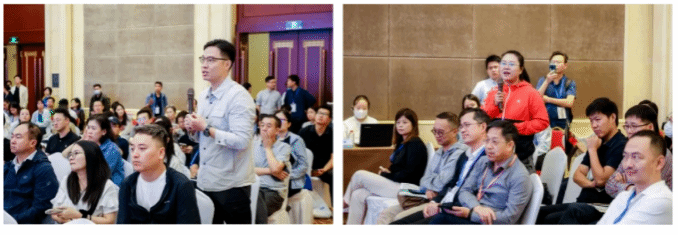
Attendees actively participated in the dialogue, with experts answering and discussing questions raised by the audience regarding key points in urban planning, decisions regarding floor area ratios, land premiums and public service facility indicators, how to calculate the overall accounts of districts, improving planners' economic and financial analysis abilities, and the significance of planning participation in the fiscal budgeting process.
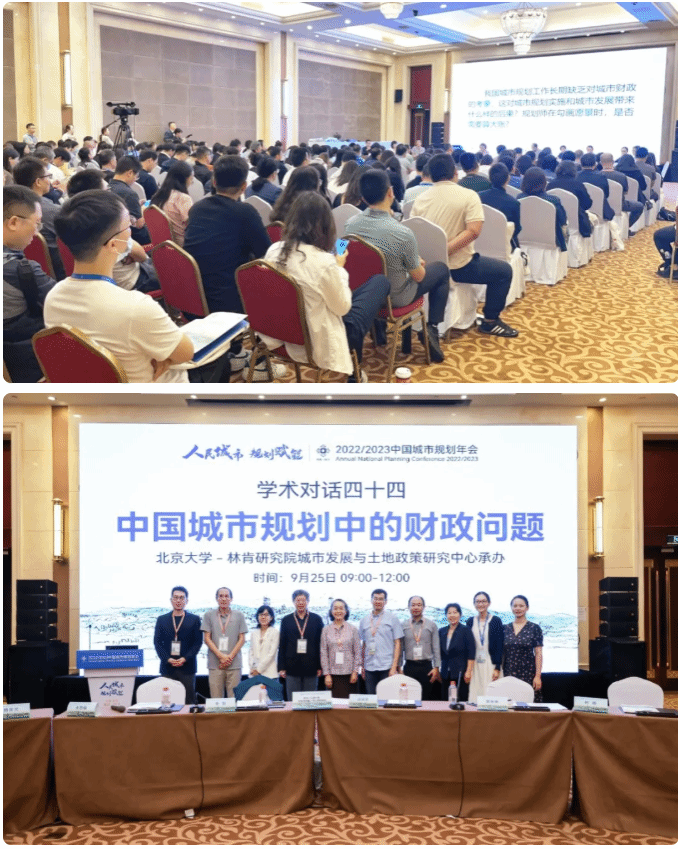
At the end of the dialogue, the two hosts summarized the meeting. Director Liu Zhi pointed out that it is necessary to reflect on the experience of urban planning and implementation over the past decade or so, and clarify areas that need improvement throughout the planning process, especially how to consider fiscal constraints. This is the key to making the next round of planning and implementation more pragmatic and successful. Dean Wang Shifu once again emphasized that urban planning must establish a reasonable public finance perspective and corresponding research, analysis, and evaluation methodologies. More importantly, it is important to adhere to the original intention of planning, namely that planning interventions should align with the public goals of urban development. Local governments should establish a more humane and responsible fiscal system to correct the problems caused by the industry's bias toward economic growth. We need to learn to use fiscal tools wisely amid economic ups and downs to more effectively capture value-added gains. In addition, we need to establish economic theories suited to China's system and, through the collaborative efforts of economics, public finance, and planning, promote the planning industry to keep pace with the times in the context of Chinese-style modernization.