As one of the key events of the 2022/2023 China Urban Planning Annual Conference, the "Mega City Housing Policy and Planning" academic dialogue, organized by Peking University Shenzhen Graduate School and the Urban Development and Land Policy Research Center of Peking University-Lincoln Institute, was successfully held on the morning of September 24, 2023. The conference focused on topics such as the housing difficulties of megacities, housing policies, housing planning, and the relationship between policies and planning. It included sessions such as introductory speeches, guest commentary, Q&A interaction, and expert dialogues, aiming to form constructive suggestions for housing planning practices in China's megacities through in-depth exchanges and discussions, promote the long-term, stable, and healthy development of the real estate market and affordable housing, and drive high-quality development in megacities.
Professor Chen Jie from Shanghai Jiao Tong University, Professor Tian Li from Tsinghua University, Professor Yan Yongtao from Guangzhou Institute of Urban Planning, Survey, and Design, Researcher Tong De from Peking University Shenzhen Graduate School, Professor Zhu Jieming from Tongji University, Director Liu Zhi from the Urban Development and Land Policy Research Center at Peking University-Lincoln Institute, Professor Liu Yuting from South China University of Technology, Professor Lu Huaxiang from China Institute of Urban Planning and Design, and Professor Ye Yumin from Renmin University of China delivered introductory speeches. Professor Feng Changchun from Peking University, Professor Zhao Pengjun participated in the discussion as the conference chair and special guest.
Executive Director of the Society, Chairman of the Watershed Spatial Planning Branch, Professor at Peking University
This academic dialogue was chaired by Professor Feng Changchun of Peking University, Executive Director of the Society and Chairman of the Watershed Spatial Planning Branch. In his introduction, he pointed out that housing issues are a matter of concern for the whole society, especially in megacities, which have a significant impact on the real estate industry, urban development, and the high-quality growth of the national economy. In megacities such as Beijing, Shanghai, Shenzhen, and Guangzhou, vacancy rates are between 5% and 7%, but housing is tight, and the structural contradiction between supply and demand is prominent. In megacities where housing prices remain high, the housing issues for low- and middle-low-income residents, as well as the practical experience of building a housing supply and security system through multi-entity supply, multi-channel support, and simultaneous rental and sales have attracted widespread attention. This academic dialogue focused on topics such as "How to view the housing issues and complexities of megacities," "What international experiences in housing security and planning for megacities can be referenced," "How can megacities integrate housing policies with spatial planning," and "What should special housing plans for megacities include, and how can implementation be promoted?"
Special Guest: Zhao Pengjun
Dean and Professor at the School of Urban Planning and Design, Peking University Shenzhen Graduate School
Professor Zhao Pengjun, Dean of the School of Urban Planning and Design at Peking University Shenzhen Graduate School, attended as a special guest to congratulate the successful academic dialogue on "Housing Policy and Planning in Megacities." President Zhao Pengjun pointed out that housing issues in megacities are crucial and have profound theoretical and practical significance. The school regards housing research as one of its key development directions, jointly establishing the Shenzhen Key Research Base for Humanities and Social Sciences with the Shenzhen municipal government, and has achieved fruitful theoretical research and policy consultation results in related fields such as housing and land. The college will continue to support research on housing issues, consistently produce high-quality results, and sincerely invites experts and colleagues to visit and exchange ideas, jointly offering advice and suggestions for national housing issues and contributing to solving practical challenges in spatial governance.
Chen Jie: "Understanding and Reflections on New Models of Housing Development"
Professor at the School of International and Public Affairs, Shanghai Jiao Tong University, and the China Institute of Urban Governance
The theme of this conference is "People's City, Planning Empowerment." Housing issues are placed within the overall framework of people's cities, essentially a matter of demand. The housing issue in megacities primarily focuses on responding to demand. Professor Chen Jie analyzed the housing demand issue from three levels: is it a commodity, an asset-based need, or a rights-based need? How much is needed, and who needs it? What is the relationship between demand and supply? The massive growth of real estate over the past 20-plus years is due to the property ownership and even assetization of housing, locking in various public resources and services, making the asset attributes of housing in megacities even stronger. The "housing is for living, not for speculation" policy and affordable housing supply essentially restrict the asset attributes of housing and emphasize its residential function and rights attributes. The housing development environment is facing trending and structural changes. Future housing demand will show a trend of declining quantity demand, rising quality demand, and integrated supply and demand. In response to changing housing demand and future trends, housing development should shift from a developer-supplied model to a new multi-entity supply model where NGOs, social organizations, and residents autonomously execute the supply.
Tian Li: "Development Models of Rental Housing in International Metropolises and Their Implications for China's Rental Housing Development"
Deputy Director of the Planning and Implementation Branch of the Society, Director and Professor of the Land Use and Housing Policy Research Center at the School of Architecture, Tsinghua University
Since the shantytown renovation began in 2015, housing prices have soared, and in recent years the real estate market has experienced ups and downs, highlighting the importance of rental housing in solving housing problems in megacities. Professor Tian Li shared research on the structure, policies, and construction systems of rental housing in major international cities, the effectiveness of policy implementation, and comparative studies of rental housing development models both domestically and internationally. It was found that the logic behind the formation of differentiated rental housing development models in different countries or regions is closely related to a country's socioeconomic development and the design of its welfare system. China has a typical dual rental housing system, with most welfare protection covering registered population. About 250 million semi-urbanized people have no right to enjoy urban welfare housing benefits, and housing costs have become the biggest obstacle hindering China's transition from land-based urbanization to population urbanization. Professor Tian Li summarized the challenges facing the development of rental housing in China's megacities, proposing that society and the market should be empowered to promote the transformation of rental housing supply models, such as encouraging enterprises to build their own properties and collective land for rental housing in diverse supply models; Encourage the revitalization of inefficient buildings and the expansion of the housing rental market, among other supply transformations. At the same time, the government's role in housing supply should shift from a control type to a service type, relaxing planning controls and mobilizing the enthusiasm of market and social actors.
Yan Yongtao: "Reflections on Housing Space Planning from the Perspective of Demand—A Case Study of Guangzhou"
Chief Engineer of the Planning Major at Guangzhou Urban Planning, Survey, and Design Research Institute, and Professor-level Senior Engineer
China's housing space special planning has long been absent, and no regular comprehensive housing survey has been formed, often resulting in insufficient demand analysis and assessment, making it difficult to identify core housing issues. Housing construction in the new era is not just about extensive supply of a single economic goal, but about maximizing the fulfillment of diverse needs and realizing multidimensional value together. Based on practical experience in Guangzhou, Chief Engineer Yan Yongtao developed a methodological pathway from population profiling to housing demand assessment and then to housing supply optimization. Based on data research and analysis, key demand groups are classified and identified in terms of housing preferences, supplying according to demand, and providing diversified housing demand products. At the same time, by comprehensively considering transportation and optimizing the balance between work and residence, a policy zoning of housing space has been formed, achieving precise supply of residential land. In the comprehensive renovation of urban villages and the operation of existing housing rentals, it proposes to promote a multi-channel housing supply model through market-oriented approaches. Strengthening housing demand analysis and promoting supply-demand adaptation is a core aspect of future housing space planning.
Tong De: "Shenzhen's Plan to Solve Housing Problems in Super-Cities Complex"
Member of the Watershed Spatial Planning Branch of the Society, Director and Researcher of the Social Experiment Center for Policy Simulation of Spatial Governance in Mega Cities at Peking University Shenzhen Graduate School
Based on the development trends of China's housing sector and the typicality and particularity of housing issues in megacities, Professor Tong De researched the limited solutions to Shenzhen's housing "complex problems." Proposing connotative solutions focused on tapping the potential of existing spaces, including establishing a sustainable multidimensional housing system; Establishing a housing market mechanism that combines renting and purchasing; Cultivate a metropolitan area residential spatial pattern with equal basic public services and integrated work-residence integration; Establish a dual residential space system for megacities with integrated functions and effective governance. In planning, it proposes coordinating housing planning between the housing and urban-rural development departments and land planning departments to prepare housing spatial planning and implementation schemes with spatial coordinates and housing characteristics; It is difficult to fully implement work-housing balance in megacities; it is recommended to optimize infrastructure and promote equalization of basic public services to promote convenient work-residence; At the same time, it proposes advancing urban village renovation in various forms through classification, phases, and various forms to help establish a healthy and affordable housing system.
Zhu Jieming: "The Merits and Demerits of Informal Housing under High-Density Urbanization"
Member of the Planning and Implementation Branch of the Society, Professor at the School of Architecture and Urban Planning, Tongji University
Professor Zhu Jieming began by discussing the concept and origins of informal housing, presenting a comprehensive picture of informal housing both domestically and internationally. He also explored the "merits" of informal housing from the perspective of spontaneously providing affordable housing for low-income groups, and discussed the "shortcomings" of informal housing from the perspective of high-density, fragmented segmentation and the tendency to lose control. Professor Zhu Jieming believes that self-built informal housing has strong negative externalities, such as lack of infrastructure, poor ventilation, and very fragmented land that easily leads to 'nail households.' Such severe community renovation is common in Southeast Asia, and low land efficiency and utilization will slow down national development. This issue deserves attention during the development of China's megacities.
Liu Zhi: "Resilient Cities: One Approach to Solving Low-Income Housing Problems in Megacities"
Director of the Urban Development and Land Policy Research Center at Peking University-Lincoln Institute
Director Liu Zhi proposed that under the framework of flexible cities, to solve the problem of low-income housing in megacities, planning should consider the spatial distribution of various housing types, match urban functions, arrange land for development, ensure land supply, and achieve widespread housing affordability. Director Liu Zhi emphasized that addressing the difficulties of low-income and new urban residents settling in cities is a long-term and ongoing task in urban development. Facing future uncertainties, urban planning cannot be rigid. It is necessary to use urban planning blank areas, relax restrictions on building use, and create resilient cities. This includes using technical means to establish transitional housing, employing housing planning methods, and coordinating housing supply for low-income groups to solve the housing problems in megacities.
Liu Yuting: "Guangzhou Affordable Housing Supply Model and Practice"
Member of the Society's Urban and Rural Governance and Policy Research Committee, Professor at the School of Architecture, South China University of Technology
Professor Liu Yuting shared the stages of evolution of affordable housing: "mass model - establishment of residual model - deepening of residual model," as well as multiple rounds of policy adjustments experienced in GuangzhouThe summary and discussion of various affordable housing supply models such as government-led and government-enterprise cooperation were discussed. Professor Liu Yuting analyzed the characteristics and mechanisms of these models, especially their spatial and social consequences. He believes that the current product adaptation of affordable housing supply is not ideal. Because it does not match real needs that arise from people and places, affordable housing supply faces policy alienation, remote location, and even marginalization between residential areas and the insured population. The government-driven urban development orientation often leads to affordable housing policies being distorted or expanded into non-basic security areas during the downward implementation process. Whether housing security for truly low-income or housing-disadvantaged groups can be implemented is a key issue that housing policies and planning in megacities should focus on.
Lu Huaxiang: "Planning Strategies for Affordable Rental Housing in Large Cities"
Director of the Housing and Residential Areas Institute at the China Academy of Urban Planning and Design, and professor-level senior engineer
Director Lu Huaxiang shared five major strategies for planning affordable rental housing in major cities. It is proposed that developing affordable rental housing is a key measure to implement the people-centered development philosophy and to solve the housing difficulties faced by new urban residents and young people in large cities. From the perspective of development positioning, it is necessary to effectively connect with the existing housing supply system: on one hand, improve the housing security system; on the other, achieve differentiated complementary development with the commercial housing market. From the perspective of demand analysis, special attention should be paid to the differentiated demand characteristics of key groups such as newly employed college students, migrant workers in industrial parks, and basic public service workers, achieving precise matching of supply and demand.
Ye Yumin: "Discussion on Policy Objectives and Supply Methods for Affordable Health Housing in Mega Cities"
Executive Director of the Society, Deputy Director of the Planning and Implementation Branch, Professor at the School of Public Administration, Renmin University of China
Professor Ye Yumin broadened the concept of affordable housing to make it more concrete, affirmed the correctness of leveraging market power to develop affordable rental housing, and put forward many policy considerations regarding the scale, quality, and methods of housing supply for Qingxin residents in mega-cities. Professor Ye Yumin believes that housing issues for the floating population need to be placed within the framework of national modernization, emphasizing and calling for the construction of healthy and affordable housing, especially affordable rental housing for families. Only healthy housing can cultivate healthy lives that support families, create a healthy society, and a healthy nation.
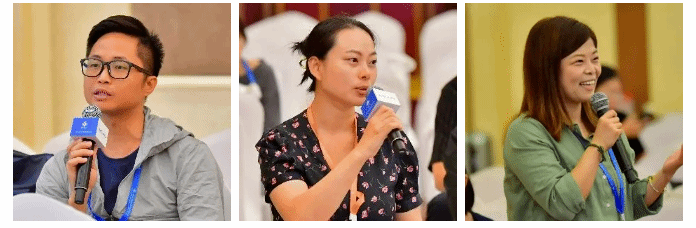
During the interactive discussion session, attendees actively asked guests questions such as whether the government can obtain compensation through tax means after land appreciation, whether urban renewal will trigger a new round of housing price increases, and how to achieve the recycling of affordable housing. The guests answered questions from multiple perspectives, including improving policy constraints, establishing exit mechanisms, and free market circulation, and put forward excellent research ideas and ideas.
At the end of this academic dialogue, Professor Feng Changchun gave a summary of the meeting. Housing issues in megacities are also among the most critical issues to address in the process of urban development. Research on housing security or housing issues, as an important direction in urban planning disciplines, deserves continued discussion and research. As planning researchers, it is necessary to further study housing issues in urban development, form constructive policy recommendations for housing planning practice in megacities, incorporate them into national plans, promote the long-term stable and healthy development of the real estate market and affordable housing, and drive high-quality development in megacities.
Contributed by: Peking University Shenzhen Graduate School, Peking University-Lincoln Institute Urban Development and Land Policy Research Center
*This article is compiled based on on-site reports and has been reviewed by experts.