To enhance the understanding and practical experience of young domestic scholars and practitioners in international spatial planning and land policy, the Urban Development and Land Policy Research Center of Peking University-Lincoln Institute, together with the School of Urban Planning and Design at Peking University, jointly organized the "Spatial Planning and Land Policy" academic exchange workshop. This workshop runs from July 26 to 31, 2021, lasting six days; The content is divided into three main sections, including inspections of the Shenzhen-Shanwei Special Cooperation Zone, eight themed lectures, and group simulation activities; Forty young scholars and practitioners from universities, research institutions, and functional departments from home and abroad participated.
From July 26 to July 31, 2021, a six-day academic exchange workshop on "Spatial Planning and Land Policy" was successfully held at the Shenzhen Graduate School of Peking University. Forty participants participated in the workshop's carefully designed Shenshan Special Cooperation Zone inspection, eight themed lectures, and group simulation activities. Here is a brief summary of the main content of the workshop.

Lecture by Associate Professor Tong De. Photography | Liu Xiuying
On the morning of July 26, after a brief opening ceremony, Associate Professor Tong De, Assistant Dean of the School of Urban Planning and Design at Peking University, gave the first lecture titled "Challenges and Reflections on the Reform of the Rural Land System in the Shenshan Special Cooperation Zone," aiming to inspire participants to conduct follow-up research, reflection, and group simulation discussions. Teacher Tong first started from the land system in China's urbanization process, proposing that land is an important lever to comprehensively address the comprehensive urbanization problem; Next, it introduces the development history, current construction status, spatial planning of the Shenzhen-Shanwei Special Cooperation Zone, and deeply analyzes the real challenges such as the contradiction between land demand and high-cost land supply under the background of rapid urbanization; Then, from the three major links of land consolidation and reserve, land transfer and trading, and implementation supervision and management, it proposes that land system reform needs to focus on nine aspects, including land acquisition and conversion, and implementation and development of reserved land; Finally, it expands on the relationship between land systems and spatial planning, fiscal and tax systems, and new technologies.

Visited the Shenzhen-Shanwei Special Cooperation Zone in Shenzhen. Photography | Li Yihao
From the afternoon of July 26 to 27, all workshop members conducted an on-site inspection of the Shenzhen-Shantou Special Cooperation Zone in Shenzhen. Director Sun Yi of the Shenshan Administration Bureau of Shenzhen Municipal Planning and Natural Resources Bureau and Director Hou Quan of the Cooperation Zone Planning Research Center had cordial exchanges with the workshop members. Wang Yanjun, Director and Planner of the Cooperation Zone Planning Research Center, explained to the trainees the historical evolution, current development, and long-term plans of the Shenshan Special Cooperation Zone, and led them on an on-site visit to the under-construction Xiaomo International Logistics Port, Xiaomo Bay Cultural and Creative Town, and Shenshan Bay Science and Technology City. Workshop members gained an understanding of spatial planning and land use layout in the cooperation zone, and recognized the various challenges encountered in the practical implementation of land policy reform.
Professor Liu Shouying's lecture. Photography by Liu Shenmin
On the morning of July 27, the second lecture of the workshop was held at the "Wangpeng Lecture Hall" in the Shenshan Special Cooperation Zone. The keynote speaker was Professor Liu Shouying, Party Secretary and Dean of the School of Economics at Renmin University of China, with the theme "New Urbanization and Land System Reform." The lecture first introduced China's "development through land" model and pointed out that this model has clearly declined, with the continued increase in land supply reducing its impact on economic development, industrial growth, and urbanization. Professor Liu Shouying assessed the short- and medium- to long-term impacts of recent policies to regulate land revenue, suspend land mortgages, centralized land supply, and transfer land transfer income to tax authorities. Finally, he proposed a series of policy recommendations, such as changing the function of the land engine to reduce economic dependence on land; Implement land structure reform to resolve deep-seated structural contradictions in the national economy; Adhere to the role of the market in the allocation of land factors; Establishing a state-owned land management company to capture the value of land appreciation gains; Increase land reform and innovation in metropolitan areas and urban-rural integration zones, among other efforts.
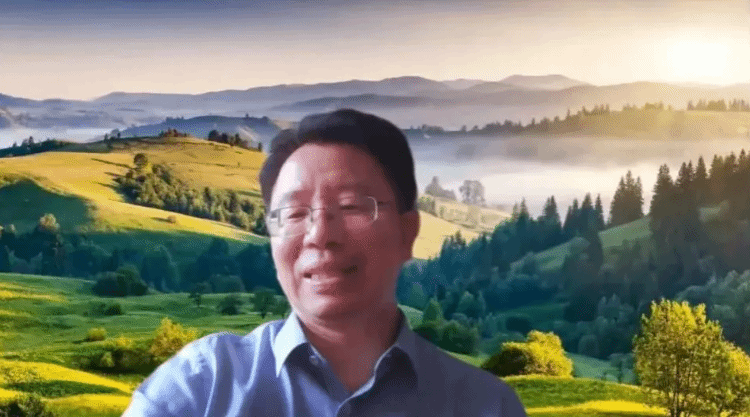
Professor He Canfei's online lecture. Screenshot | Song Yang
On the morning of July 28, the third lecture was an online special report titled "Territorial Spatial Planning and Industrial Policy" by Professor He Canfei, Dean of the School of Urban and Environmental Sciences at Peking University. Professor He Canfei began with the debate between Lin Yifu and Zhang Weiying on industrial policy, systematically introducing the concept, classification, and historical evolution of industrial policy, outlining the territorial spatial planning system and its establishment, and analyzing the internal logic of territorial spatial planning and industrial policy. The lecture explored in detail the industrial policies and regional differences and effectiveness of the eastern, central, northeastern, and western regions, analyzed how existing industrial policies shape industrial spatial layouts, and proposed supporting design suggestions for industrial policies under territorial spatial planning.
Professor Shen Chi's lecture. Photography by Liu Shenmin
On the afternoon of July 28, the fourth lecture was a keynote report on "14th Five-Year Territorial Spatial Planning" by Professor Shen Chi, Deputy Director of the Urban and Small Town Reform and Development Center of the National Development and Reform Commission and a professor-level senior urban planner. Professor Shen first reviewed the "lineage" of various plans, introducing the positioning and objectives of territorial spatial planning from technical routes and basic requirements, clarifying the requirements and main tasks of territorial spatial planning and spatial planning in the new era. Furthermore, by introducing the four key elements of urban agglomeration development, the current status and development paths of metropolitan areas, five-in-one characteristic towns, and five models of rural revitalization, he elaborated in detail on urbanization development and layout during the 14th Five-Year Plan. Professor Shen believes that despite many uncertainties, the "future" of territorial spatial planning and new-type urbanization has arrived.

Lecture by Researcher Lin Jiabin. Photography by Liu Shenmin
On the morning of July 29, the fifth lecture was titled "Natural Resource Management in Territorial Spatial Planning," with Lin Jiabin, former inspector and researcher at the Development Research Center of the State Council. He first introduced the definitions of natural resources and natural resource management, providing a detailed explanation of the characteristics of various natural resources and the content and procedures of natural resource management; Second, it introduces the connection between territorial spatial planning and natural resources, including the content and future development trends of territorial spatial planning, key policies related to natural resources in the planning, and institutional reforms undertaken by national departments to achieve planning; Next, Professor Lin explained the definition, characteristics, and means of implementing natural resource policies, presented policies corresponding to the main functional area policies, and looked ahead to future development trends in natural resources; Finally, Professor Lin introduced the national park system and relevant policies for nature reserves.

Director Liu Zhi gave a lecture. Photography by Liu Shenmin
On the afternoon of July 29, the sixth lecture was titled "Land Appreciation Recycling," delivered by Mr. Liu Zhi, Director of the Peking University-Lincoln Center. The lecture starts from the composition of land value, introduces the concept of land appreciation recovery, and uses the example of Haussmann in Paris in the 19th century to introduce how the government financed cities through land and then used land appreciation recovery to repay loans; Next, Professor Liu Zhi used rich case studies from China, the United States, Brazil, India, Japan, and the Netherlands to provide detailed introductions to various land value value recovery policy tools based on land value, developer responsibility, and land property rights transactions. He analyzed the actual situation in China and summarized the applicable land value value recovery policy tools under different circumstances; Finally, Professor Liu Zhi also introduced the legal framework for land value appreciation recovery.
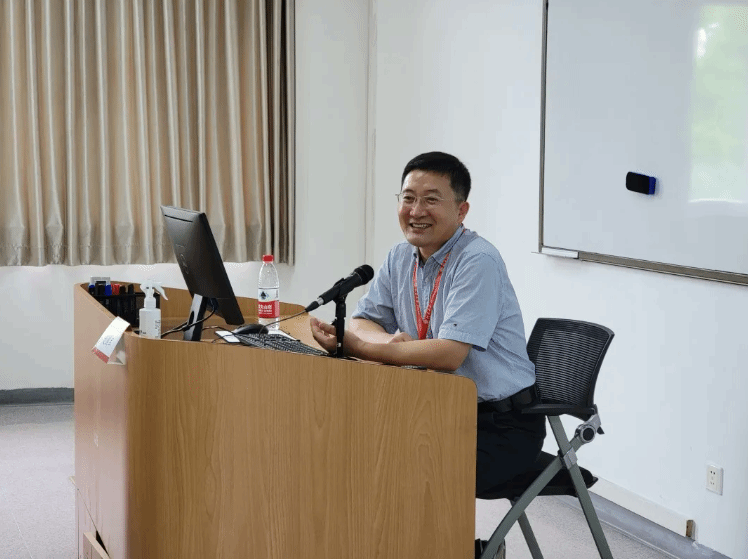
Professor Zhao Pengjun's lecture. Photography by Liu Shenmin
On the morning of July 30, the seventh lecture was titled "Smart Cities and Their Planning," delivered by Professor Zhao Pengjun, Dean of the School of Urban Planning and Design at Peking University. Professor Zhao first clarified the connotation of urban complexity and, based on reviewing current domestic and international progress in smart city research, analyzed the concept, characteristics, advantages, and challenges faced by smart cities; Next, Professor Zhao elaborated in detail on global smart city development trends and China's national strategy for smart city development, and further introduced topics such as smart cities, disaster monitoring and early warning, and urban computing. Professor Zhao believes that the road to the development and promotion of smart cities in China remains long, and further phased advancement is needed in the future.
Lecture by Policy Researcher Liu Wei. Photography | Liu Xiuying
On the afternoon of July 30, the eighth lecture was titled "International Experience in Real Estate Tax and Chinese References," delivered by Professor Liu Wei, Senior Policy Researcher at Peking University-Lincoln Center. The lecture started from the definition of real estate tax, introducing the functions and roles of real estate tax, the development trends and challenges faced by real estate tax in countries around the world; Afterwards, addressing hot topics in China's property tax reform, Professor Liu Wei summarized valuable lessons and lessons from an international perspective. This lecture provided participants with a comprehensive, systematic, and objective opportunity to understand real estate tax.
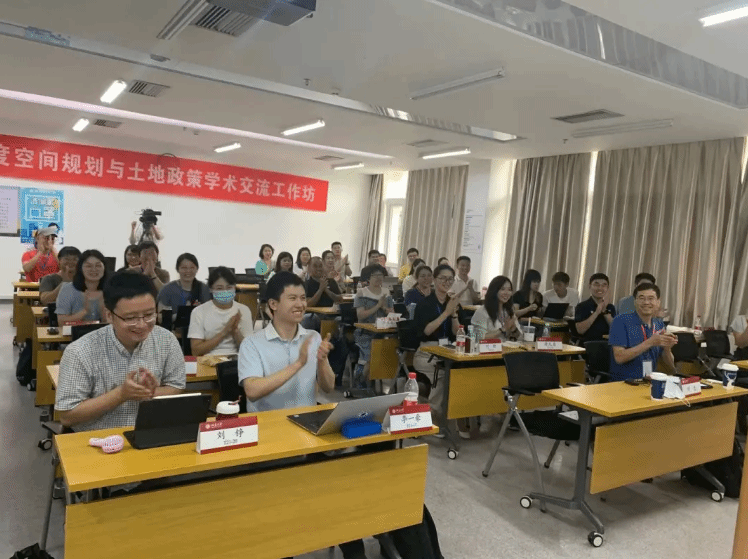

Lecture site. Photography | Jin Tao
With this, the workshop has completed eight special lectures, followed by the "Scenario Simulation Game Design" session. Extracting problems through practice, introducing theory from problems, seeking solutions through theoretical study, and verifying the operability of solutions through role-playing simulations—this is the internal logic followed by this workshop.
Dr. Wang Jinshuo presides over the gaming game. Photography by Liu Wei
Dr. Wang Jinshuo introduced the relevant content of "scenario simulation game design" and gave a detailed explanation of simulation games set against the backdrop of the Shenzhen-Shanwei Cooperation Zone, specifically explaining key issues in game mechanics, rules, strategies, and negotiation, guiding participants to form groups, assign roles, and negotiate solutions.
Group discussion. Photography | Li Wenjing
Group report. Photography | Jin Tao
Reporting the scene. Photography by Liu Shenmin
On July 31, after half a day of intense simulation training in the morning, participants actively participated in the game process through discussion and negotiation, and produced a PPT showcasing their results. In the afternoon, the participants reported their results in groups and roles, earning rounds of applause and creating a lively atmosphere.
Director Sun Yi commented. Photography | Jin Tao
Director Geng Jijin commented. Photography | Jin Tao
The guest commentators were Geng Jijin, former Director of the Shenzhen Real Estate Transaction Center; Sun Yi, Director of the Shenshan Administration Bureau of Shenzhen Planning and Natural Resources Bureau; Liu Zhi, Director of the Peking University-Lincoln Center; and Associate Professor Tong De, Assistant Dean of the School of Urban Planning and Design. After the guests' entertaining and thought-provoking comments, the winning team was decided by a full vote at the venue. Guests presented awards to the winning teams. The workshop thus concluded successfully.
Team leader. Photography by Liu Shenmin
Team runner-up. Photography by Liu Shenmin