To enhance the understanding and practical experience of young domestic scholars and practitioners in international spatial planning and land policy, the Urban Development and Land Policy Research Center of Peking University-Lincoln Institute, together with the School of Urban Planning and Design at Peking University, jointly organized the "Spatial Planning and Land Policy" academic exchange workshop. This workshop runs from July 26 to 31, 2021, lasting 6 days; The content is divided into three main sections, including an inspection of the Shenzhen-Shanwei Cooperation Zone, eight themed lectures, and group simulation activities; Forty young scholars and practitioners from universities, research institutions, and functional departments from home and abroad participated
From the afternoon of July 26 to July 27, 2021, as an important part of the "Spatial Planning and Land Policy" academic exchange workshop, all workshop members visited the Shenshan Special Cooperation Zone and conducted a one-and-a-half-day field investigation.

Director Sun Yi exchanged ideas with workshop members. Photography by Liu Shenmin
On the afternoon of the 26th, Director Sun Yi of the Shenshan Administration Bureau of Shenzhen Municipal Planning and Natural Resources Bureau and Director Hou Quan of the Cooperation Zone Planning Research Center had cordial exchanges with workshop members. Wang Yanjun, Director and Planner of the Cooperation Zone Planning Research Center, explained to the participants the historical evolution, current development status, and long-term planning of the Shenshan Special Cooperation Zone. The Shenshan Special Cooperation Zone is an important practice of connectivity in the Guangdong-Hong Kong-Macao Greater Bay Area, a continuation of Shenzhen's speed and pioneering spirit, and will become an innovative industrial hub in the future Guangdong-Hong Kong-Macao Greater Bay Area.

Professor Liu Shouying will lecture at the Wangpeng Grand Lecture Hall. Photography | Liu Xiuying
On the morning of the 27th, at the "Wangpeng Lecture Hall" organized by the Shenshan Special Cooperation Zone Administrative Committee, Professor Liu Shouying, Party Secretary and Dean of the School of Economics at Renmin University of China, delivered a lecture titled "New Urbanization and Land System Reform." Liu Zhi, Director of the Peking University-Lincoln Center, spoke as a guest. Wang Yankui, Secretary of the Party Working Committee of the Shenshan Special Cooperation Zone Administrative Committee; Wu Qubo, Director; Wen Wei, Deputy Director; Xie Haisheng, Deputy Secretary; and Deng Ling, Standing Committee Member of the Party Working Committee, attended the lecture. Deputy Director Wen Wei presided over the lecture and commented that the two experts shared years of research achievements and provided policy recommendations for land system reform in the Shenshan Cooperation Zone. The zone will continue to deepen land system reform in line with the goal of building a pastoral city, maximize the value of land, share the dividends of reform and development with all the people of the district, and achieve urban-rural integration. In addition to workshop members, participants in this lecture included key leaders from various departments of the Shenshan Special Cooperation Zone Administrative Committee.
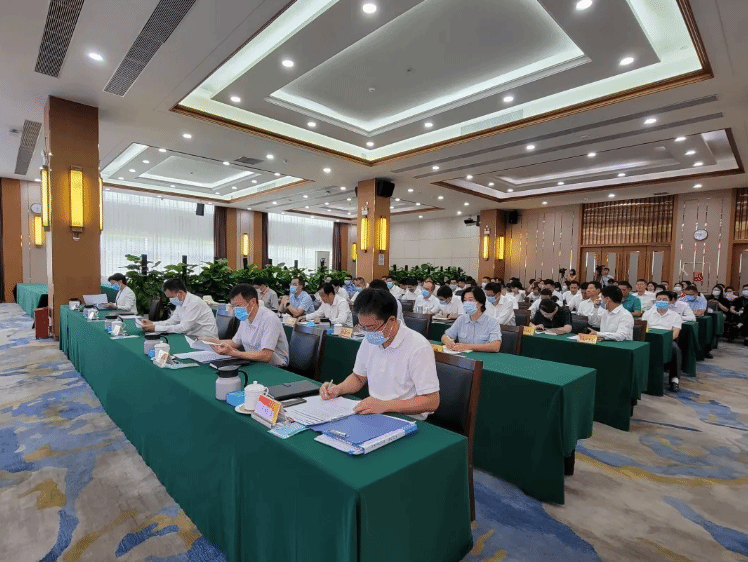
Scene at Wangpeng Lecture Hall. Photography by Liu Shenmin
On the afternoon of the 27th, under the leadership of Wang Yanjun, Chief Planner of the Shenshan Cooperation Zone Planning Research Center, workshop members visited the under-construction Xiaomo International Logistics Port, Xiaomo Bay Cultural and Creative Town, and Shenshan Bay Science and Technology City.
Xiaomo International Logistics Port. Photography by Liu Shenmin
Xiaomo Bay fishing village. Photography | Qu Junxi
Xiaomo Bay Cultural and Creative Town. Photography by Liu Shenmin
Shenshan Bay Science and Technology City. Photography by Liu Shenmin
Through on-site inspection, this visit aimed to understand the spatial planning and land use layout of the Shenshan Special Cooperation Zone, recognize the various challenges that land policy reform may encounter in practice, and provided a practical basis for further academic discussion.